
Water and fluids
How much you need, how to tell it is enough and when it is possible to drink too much.
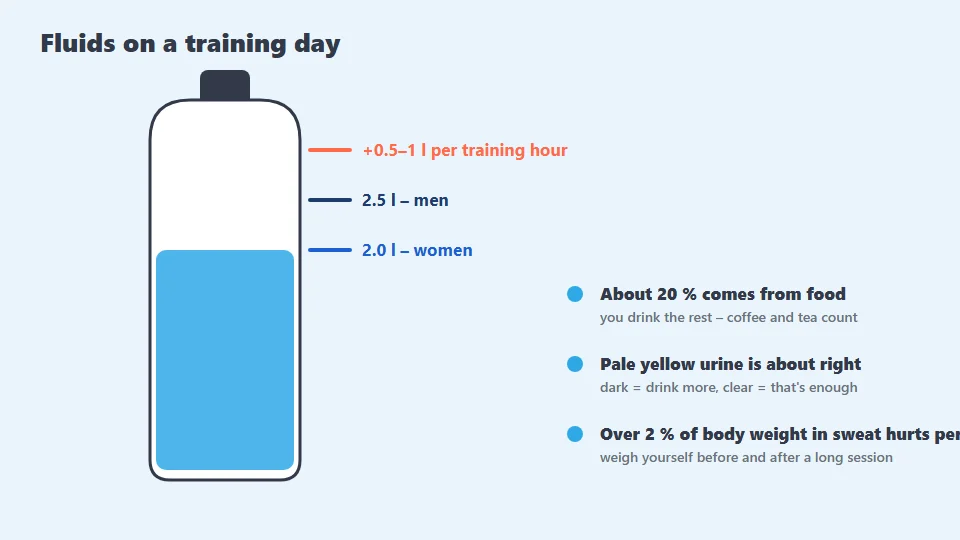
You need more fluid than you think on a training day, but less than much advice suggests on an ordinary day.
How much
The European Food Safety Authority's reference intake is about 2 litres a day for women and 2.5 litres for men, everything included. Around a fifth comes from food, so drinking 1.5–2 litres is enough for most people. Per kilo of body weight that is about 30 millilitres – the figure Passboken shows under Food. Coffee and tea count; caffeine does not dehydrate you at normal amounts.
When training
Expect 0.5–1 litre extra per hour of training, more in heat and if you sweat a lot. A simple way to know: weigh yourself before and after a long session – each kilo lost is roughly a litre of fluid. Losing more than two percent of body weight usually shows in performance.
How to tell it is enough
Thirst is a good signal for most people day to day. Pale yellow urine means you are fine, dark means you are behind. Afternoon headache and tiredness are sometimes just too little fluid.
Salt
If you sweat heavily for a long time you also lose salt. On sessions over two hours, in heat, a sports drink or some salt in the meal afterwards can be justified. On an ordinary day nothing extra is needed.
Can you drink too much?
Yes, on very long races. Drinking large amounts of water without salt over several hours can dilute the blood's sodium, which is dangerous. Drink to thirst and replace salt on long races – not "as much as possible".
Sources and further reading are in the app under Learn. Passboken gives general advice and does not replace a doctor or dietitian. · Updated 2026-10-26
Programs that follow this
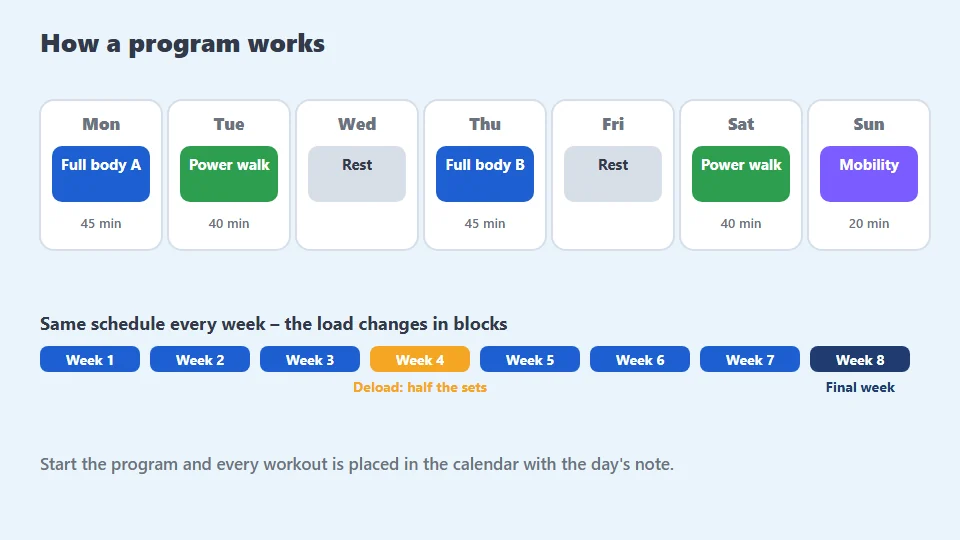
Get the app, pick the program and tap Start – the workouts are placed in your calendar and can be moved. Free, no ads.
Read more