
Losing weight
Energy balance, a sustainable pace, protein, steps and how to measure.
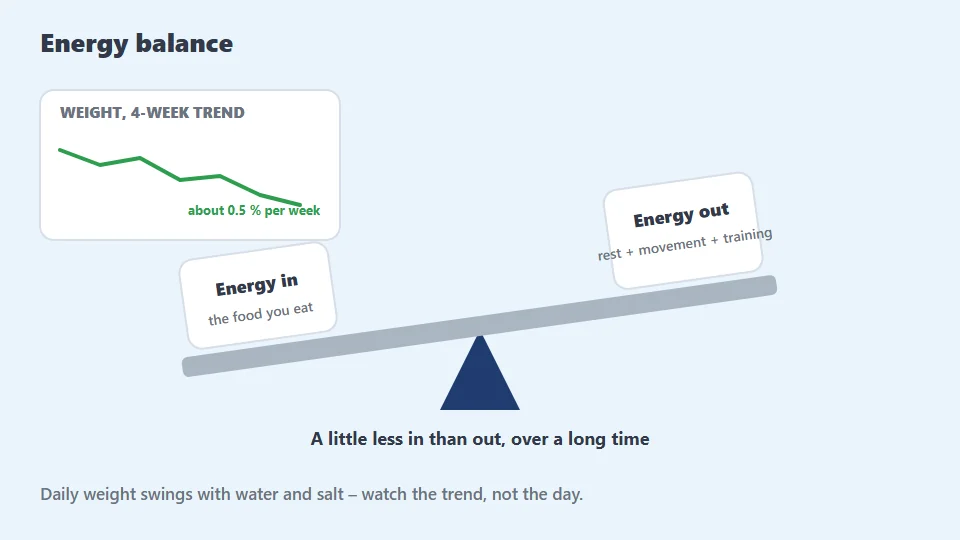
Weight comes off when, over a longer period, you eat less energy than you use. Training helps, but for most people food matters most. Strength training influences what disappears: fat or muscle.
Pace
About 0.5 percent of body weight per week (half a kilo for many) is a common guideline for a pace you can sustain and that spares muscle. That equals roughly 300–500 kcal below your needs per day. A faster pace raises the risk of losing muscle and energy in the workouts.
What you eat
- Protein at every meal, 1.6–2 grams per kilo per day. Protein satiates well per calorie and helps protect muscle.
- Vegetables for half the plate. Volume and fibre for few calories.
- Nothing is forbidden. It is the week's total energy that counts, not a single meal.
- Liquid calories (soda, juice, alcohol) are the easiest to remove.
Movement
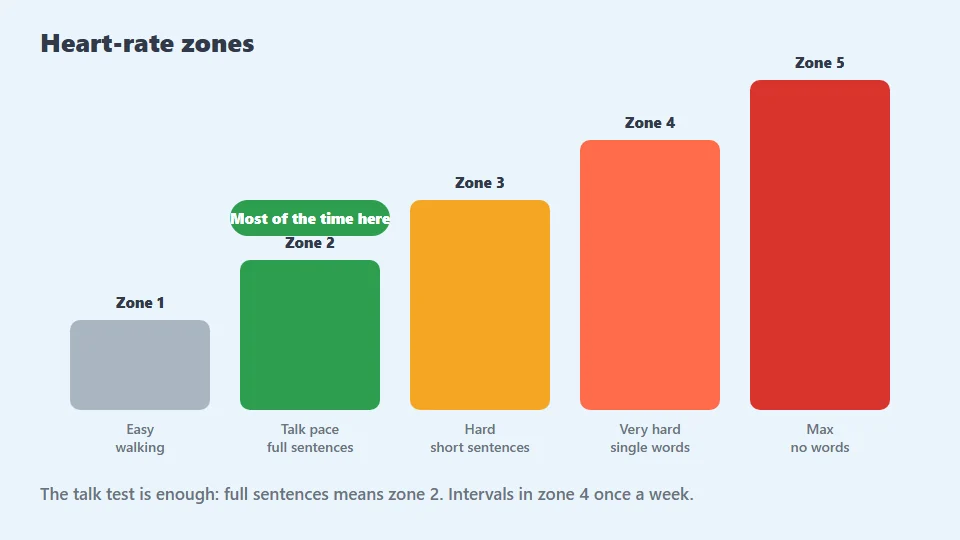
Strength training twice a week is strongly recommended – without it a substantial share of the weight lost (often a quarter or more) can be muscle rather than fat. Powerwalks and walks raise expenditure: 8,000–10,000 steps a day or 150–300 minutes of brisk activity a week are common guidelines.
Measuring right
Weigh yourself the same morning every week, after the bathroom, before breakfast. Log under Body and look at the four-week trend – daily weight can swing a kilo or more from water and salt. Waist measurement is often a useful complement to the scale when you lift at the same time.
When it stalls
Three weeks with no change in the trend: cut another 100–200 kcal or add a powerwalk. Many do well with a week at maintenance every six to eight weeks – research is not conclusive that it improves results, but it can make it easier to keep going.
Signs you are pushing too hard
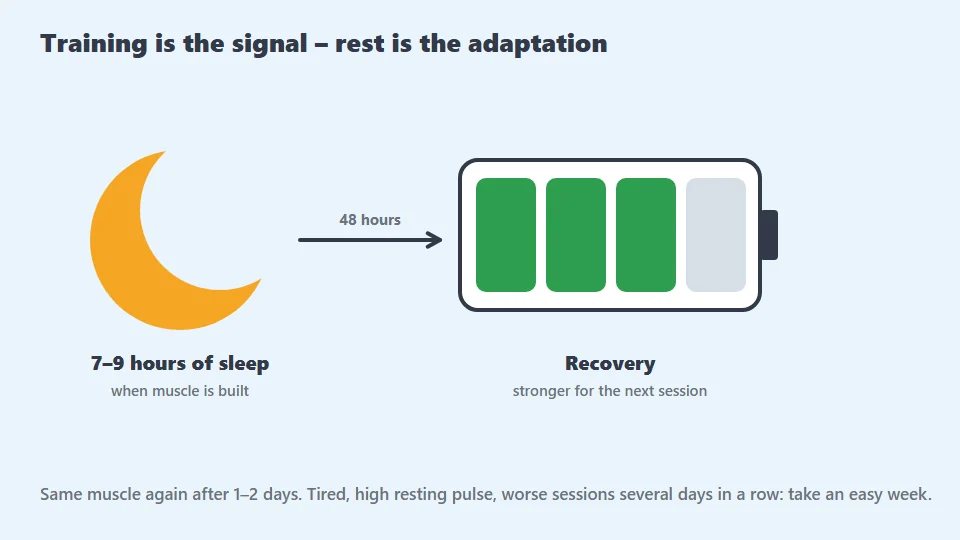
Tired all the time, sleeping badly, workouts feel impossible, thinking about food constantly. Eat more for a week. This should be livable. If you have a medical condition, are pregnant or take medication: talk to a doctor or dietitian before changing your diet.
Sources and further reading are in the app under Learn. Passboken gives general advice and does not replace a doctor or dietitian. · Updated 2026-10-26
Programs that follow this
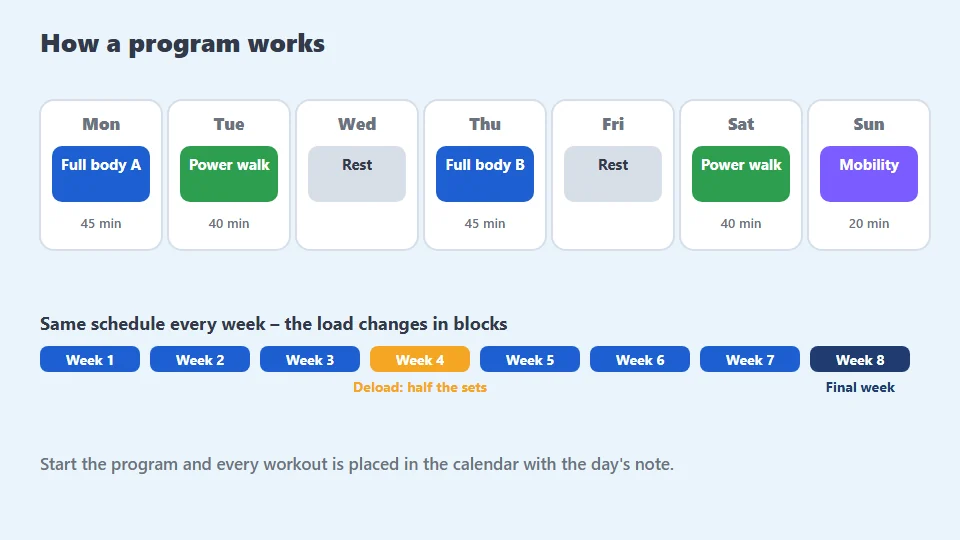
Get the app, pick the program and tap Start – the workouts are placed in your calendar and can be moved. Free, no ads.
Read more