
Alcohol and training
What alcohol does to recovery, sleep, muscle and weight – and when it costs the most.
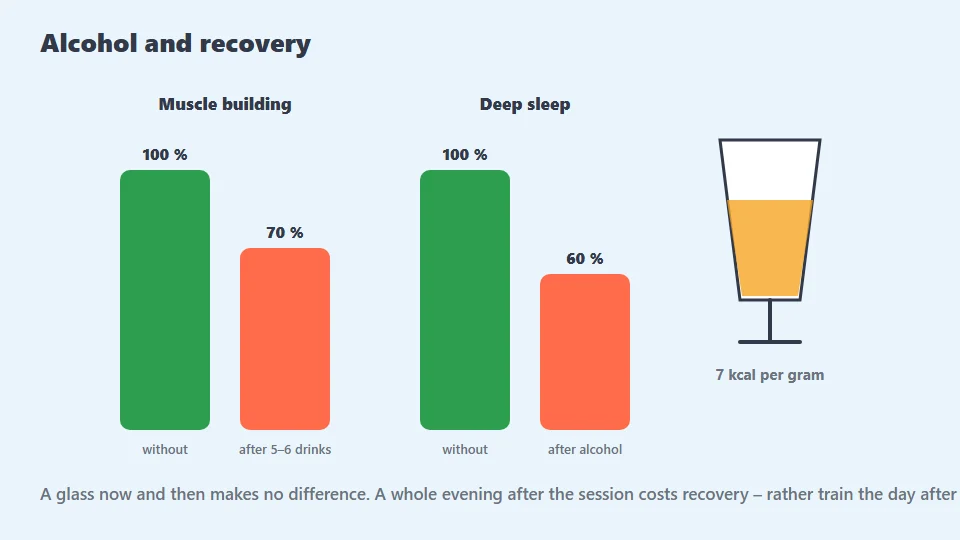
Alcohol and training can be combined, but not for free. Most of the effect comes down to when and how much.
Recovery
Studies where participants drank the equivalent of six to seven standard drinks after a strength workout show that muscle protein synthesis – the repair of the muscle – drops by roughly a quarter to a third, even when they had protein. One or two drinks show no clear measurable effect in the studies available. The evening after a hard workout is when alcohol costs the most.
Sleep
Alcohol makes you fall asleep faster but sleep worse: less deep sleep and more awakenings in the second half of the night. Since sleep is when recovery happens, it hits the next day's training directly.
Fluids and energy
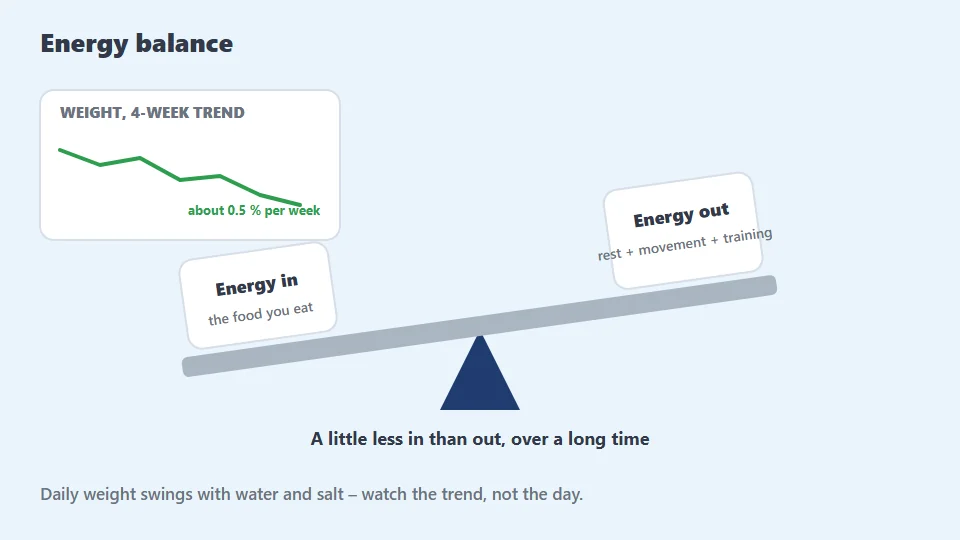
Alcohol is a diuretic and provides 7 kcal per gram – a glass of wine or a strong beer is 100–200 kcal that rarely gets counted. When losing weight, this is often where the "invisible" calories are. The day after, heart rate is often higher and performance lower, even after moderate amounts.
Before races
Avoid alcohol the last two evenings before a race or an important session. It is not a moral question but sleep, fluids and pace.
A reasonable stance
Less is better for training, but a glass with dinner does not ruin a program. Swedish public health guidance notes that health risks rise clearly above ten standard drinks a week. If you find it hard to keep to moderate amounts, it is worth taking seriously, regardless of training.
Sources and further reading are in the app under Learn. Passboken gives general advice and does not replace a doctor or dietitian. · Updated 2026-10-26
Programs that follow this
Get the app, pick the program and tap Start – the workouts are placed in your calendar and can be moved. Free, no ads.
Read more